Classical Vinyl Records: Pressings, Labels and Landmark Recordings
Why collect classical music on vinyl?
This collection of classical vinyl records covers the whole repertoire, from early and Baroque music to contemporary works, by way of symphonies, concertos, sonatas, recitals and opera. The LP and classical music grew up together: fitting a long work onto a single disc was a big part of why Columbia launched the long-playing record in 1948. The golden age of stereo, from the 1950s through the 1970s, left a catalog of landmark recordings that still circulate widely on vinyl.
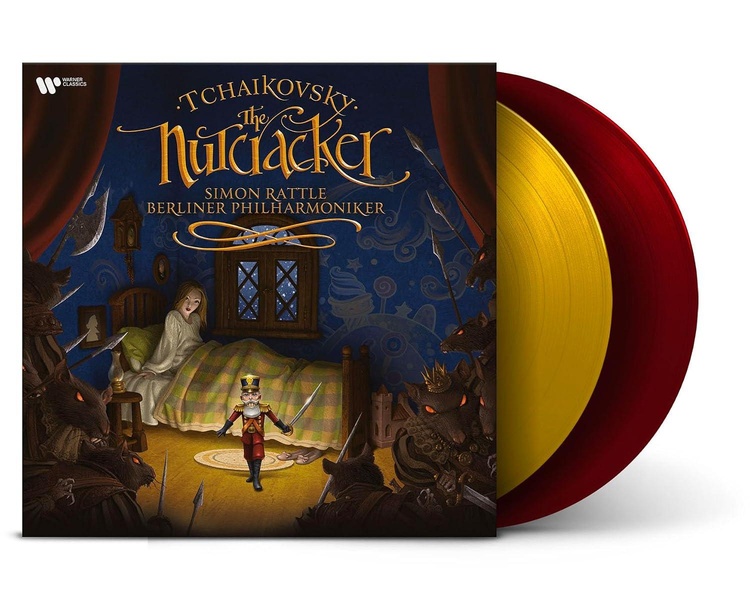
You'll find great conductors of the past, such as Bernard Haitink and André Previn, alongside current performers like Sir Simon Rattle, Leif Ove Andsnes, Alexandre Tharaud and Magdalena Kozena. For each recording, the record page compares offers from several partner stores, new and reissued. The price of the same recording can vary quite a bit depending on the edition and the store.
Original pressing or reissue: buying classical LPs
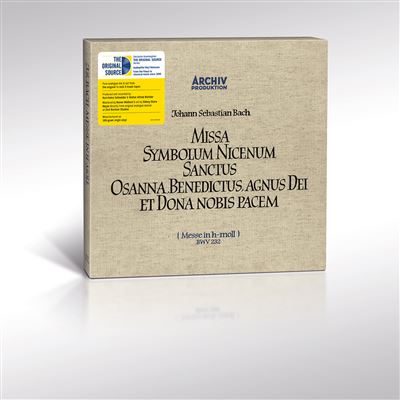
With classical records, the label tells you a lot. Collectors look for Deutsche Grammophon "tulip" labels, Decca "wide band" pressings, RCA Living Stereo "shaded dog" copies and Mercury Living Presence records, all prized for their sound. These originals mostly sell used, at widely varying prices. When they're out of reach, audiophile reissues from Speakers Corner and Analogue Productions, or Deutsche Grammophon's "The Original Source" series cut from the analog tapes, are excellent alternatives.
- the exact recording: conductor, orchestra, soloist and year
- stereo or mono for 1950s recordings
- complete opera box sets, libretto included
- surface condition, since quiet passages reveal every click
Which landmark classical recordings should you know?
A few recordings serve as reference points: Glenn Gould's "Goldberg Variations", recorded in 1955, Maria Callas's "Tosca" conducted by Victor de Sabata (recorded in 1953), Herbert von Karajan's Beethoven symphony cycle for Deutsche Grammophon (recorded in 1961-62, released as a box set in 1963), and Georg Solti's Wagner "Ring" for Decca, the first complete studio recording of the cycle. For Baroque music, John Eliot Gardiner, with The English Baroque Soloists and The Monteverdi Choir, shaped period-instrument performance.
Contemporary and minimalist music has its own vinyl classics, such as Arvo Pärt's "Tabula Rasa" on ECM and Steve Reich's "Music for 18 Musicians", two works conceived as a whole that reward listening to an entire side without interruption. Philip Glass and Max Richter carry on that vein, and their music is well represented in recent vinyl releases.
Symphonies, opera, Baroque: the subcollections
The section is organized by form and period: classical symphony, classical concerto, classical sonata, classical recitals, opera / operetta / lyrical singing, masses / requiems / passions, liturgy, ballets, early music, Baroque music, Romantic music, contemporary music and minimalist music. If you're just starting out, pick a piece you love and compare several versions: in classical music, the performer and the recording matter as much as the work itself.